
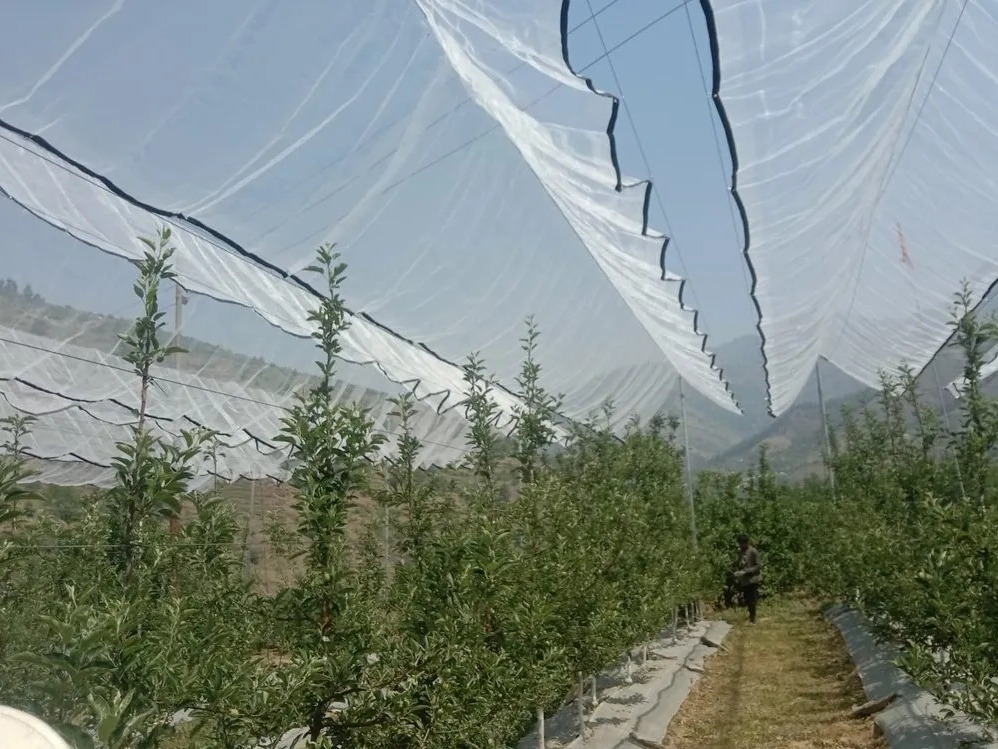
Anti-hail nets are protective covers made of durable, lightweight materials like high-density polyethylene (HDPE) that are installed over crops to shield them from hail damage. They work by creating a physical barrier that intercepts hailstones, while the net's mesh allows sunlight and air to pass through to the plants. Beyond hail protection, these nets also offer benefits like reducing sun damage and preventing pests, birds, and frost, making them a crucial tool for crop resilience and yield preservation in agriculture and horticulture. Key features and benefits Hail and weather protection: The primary function is to act as a physical barrier against hailstones, but they also protect against wind, strong rain, and frost. Crop and yield preservation: By preventing physical damage to crops like fruits and vegetables, they help maintain their quality and marketability and prevent significant economic losses. Improved microclimate: Nets help create a more stable environment by providing shade, which can protect crops from sunburn and reduce temperature fluctuations. Pest and bird control: They can provide a barrier against larger pests and birds, further protecting crops. Material and durability: Typically made from UV-stabilized HDPE monofilament, they are strong yet lightweight, flexible, and designed for longevity in harsh weather conditions. Other benefits: Some studies suggest nets can help reduce flower and fruit drop and improve aeration, leading to healthier plants. Installation and use Installation: They are installed over crops using a framework of poles or cables to create a protective canopy. Usage: Anti-hail nets are widely used in various agricultural settings, including fruit orchards, vineyards, and vegetable farms.


This is your website preview.
Currently it only shows your basic business info. Start adding relevant business details such as description, images and products or services to gain your customers attention by using Boost 360 android app / iOS App / web portal.
Anti-hail nets are protective covers made of durable, lightweight materials like high-density polyet...
2025-10-14T10:35:41
Anti-hail nets are protective covers made of durable, lightweight materials like high-density polyethylene (HDPE) that are installed over crops to shield them from hail damage. They work by creating a physical barrier that intercepts hailstones, while the net's mesh allows sunlight and air to pass through to the plants. Beyond hail protection, these nets also offer benefits like reducing sun damage and preventing pests, birds, and frost, making them a crucial tool for crop resilience and yield preservation in agriculture and horticulture. Key features and benefits Hail and weather protection: The primary function is to act as a physical barrier against hailstones, but they also protect against wind, strong rain, and frost. Crop and yield preservation: By preventing physical damage to crops like fruits and vegetables, they help maintain their quality and marketability and prevent significant economic losses. Improved microclimate: Nets help create a more stable environment by providing shade, which can protect crops from sunburn and reduce temperature fluctuations. Pest and bird control: They can provide a barrier against larger pests and birds, further protecting crops. Material and durability: Typically made from UV-stabilized HDPE monofilament, they are strong yet lightweight, flexible, and designed for longevity in harsh weather conditions. Other benefits: Some studies suggest nets can help reduce flower and fruit drop and improve aeration, leading to healthier plants. Installation and use Installation: They are installed over crops using a framework of poles or cables to create a protective canopy. Usage: Anti-hail nets are widely used in various agricultural settings, including fruit orchards, vineyards, and vegetable farms.
2025-10-14T10:35:41


Submit Your Enquiry